
Introduction
Installing an edge protection system is not only about placing posts, rails, or panels around an open edge. On real construction sites, installation quality directly affects safety, compliance, and project efficiency.
In many cases, edge protection problems are not caused by product failure. They happen because the wrong fixing method is selected, important components are missing, spacing is incorrect, or special site conditions are not considered before installation begins.
This article explains some of the most common edge protection installation problems seen on site, why they happen, and how contractors can avoid them before they turn into delays, rework, or safety risks.
Why Proper Edge Protection Installation Matters
A good edge protection system can only perform properly when it is installed correctly. Even a well-designed system may create problems if it is fixed to the wrong structure, spaced incorrectly, or assembled without the full set of required components.
Poor installation can lead to several issues at the same time. It may reduce protection quality, create gaps around hazardous edges, slow down follow-up work, or cause costly adjustments after delivery. In more serious cases, it can also raise compliance concerns and increase the risk of accidents on site.
For contractors and project teams, the real objective is not simply to buy edge protection. It is to make sure the system matches the structure, installs efficiently, and performs reliably once in place.
1. Choosing the Wrong Fixing Method for the Structure
One of the most common installation problems starts before the products even arrive on site. The system selected may not match the actual structure.
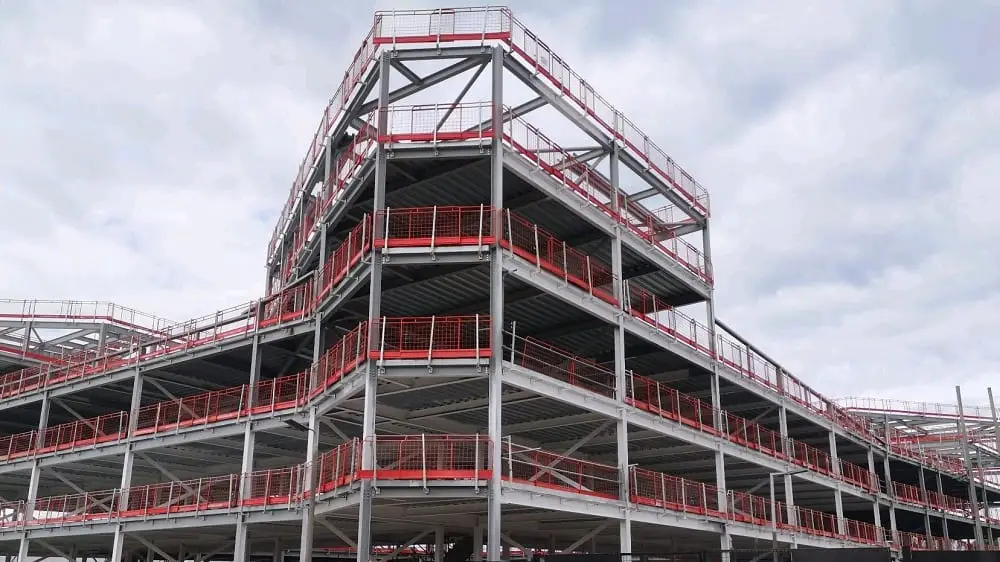
Concrete slab edges, steel beams, parapets, stair openings, shafts, and excavation areas do not use the same fixing method. A system that works well on one type of edge may be unsuitable for another. For example, a slab-mounted solution may not be the right choice for a steel beam edge, and a clamp-based system may not suit every concrete application.
This problem usually happens when the order is placed based only on a general product name rather than the real site condition.
How to avoid it
Before placing the order, confirm exactly where the system will be installed. Share the structure type, slab thickness, steel profile, parapet detail, or opening condition with the supplier. If possible, provide drawings, dimensions, or site photos. A more accurate inquiry makes it easier to select the correct fixing method from the start.
2. Inadequate or Unstable Fixing
Even when the correct system type is chosen, installation can still fail if the fixing is not secure.
This may happen when clamps are not tightened properly, anchors are installed poorly, the supporting surface is uneven, or the substrate is weaker than expected. In some cases, crews may rush installation and assume the fixing is “good enough” without checking whether it is actually stable.
This type of problem is especially serious because the weakness is often not obvious until the system is already in use.
How to avoid it
The supporting structure should be checked before installation begins. The crew should confirm that the surface condition, thickness, and edge detail are suitable for the selected system. Installers should follow the recommended fixing method rather than making on-site changes without verification. After installation, critical fixing points should be inspected again before the area is handed over for use.
3. Incorrect Post Spacing
Post spacing is another common issue on site. When posts are installed too far apart, the rails or mesh panels may not fit properly, and the overall system may lose consistency and stability.
This problem often happens when crews try to reduce the number of posts, adjust spacing to suit missing parts, or work without a clear layout drawing. What looks like a small change during installation can quickly affect the entire line of protection.
How to avoid it
Always follow the recommended post spacing for the system being used. Do not increase spacing simply to reduce component quantity or compensate for missing pieces. If the project includes long straight runs, corners, or irregular edges, a basic layout drawing should be prepared before installation starts. Clear spacing rules reduce both fitting problems and rework.
4. Missing Midrails, Toe Boards, or Other Secondary Components
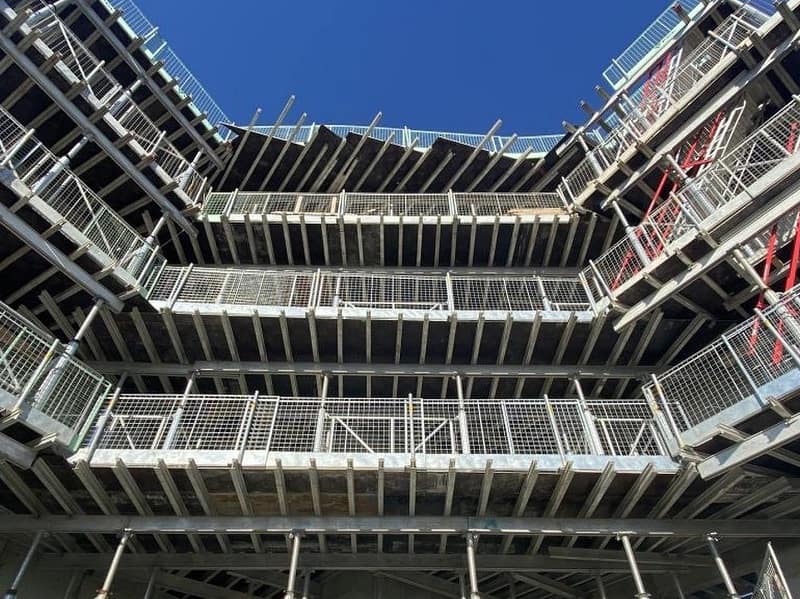
Another frequent problem is incomplete installation. The posts and top rails may be installed, but secondary components such as midrails, toe boards, locking pins, or mesh infill panels are left out.
In some cases, this happens because the original order did not include the full component list. In others, the components were delivered but not installed because the crew focused only on the main frame. Either way, the protection line is incomplete.
This is one of the clearest examples of how a system can appear installed while still not being fully ready for use.
How to avoid it
Before delivery, confirm the full bill of materials for the system. Once the shipment arrives, check that all components are present before installation begins. Installers should verify not only the primary items, but also the smaller supporting parts that complete the system. A full pre-installation check can prevent delays and missing-component issues later.
5. Poor Installation Around Corners, Openings, or Level Changes
Straight slab edges are usually the easiest part of any edge protection layout. The more difficult areas are corners, step-downs, stair zones, shaft openings, and other irregular transitions.
These locations often create gaps because they are not treated as separate installation points. A system may work well on the main run but fail to create continuous protection where the geometry changes.
This usually happens when takeoff is based only on linear edge length without thinking through special conditions.
How to avoid it
Corners, openings, level changes, and stair details should be identified during the planning stage, not left until installation day. These areas often need additional components, different bracket arrangements, or a separate layout approach. When reviewing a quotation or layout, check whether these special areas are included rather than assuming the standard run covers everything.
6. Using Damaged, Worn, or Mixed Components
Installation quality can also be affected when damaged components are used or when parts from different systems are mixed together without checking compatibility.
Bent posts, deformed mesh panels, worn locking pieces, or mismatched rails can all make installation more difficult. In some cases, crews use whatever is available on site to finish the work quickly, but this often creates fitting issues and inconsistent performance.
How to avoid it
All components should be checked before installation. Damaged parts should be separated and replaced rather than forced into use. If a project uses replacement parts or additional stock from another batch, compatibility should be confirmed first. Edge protection systems work best when the components are designed to work together as one system.
7. Ignoring the Correct Installation Sequence
Some installation problems do not come from the system itself, but from the order in which the system is assembled.
If the installation sequence is unclear, crews may need to remove and reinstall parts, adjust already-fixed items, or return to the same area several times. This slows down the job and increases the chance of missing pieces or incorrect assembly.
It is a common problem on fast-moving sites where the crew is familiar with general edge protection, but not with the exact system being used.
How to avoid it
Installers should follow the recommended sequence for that system. On larger or more complex projects, a short installation briefing or sample setup can help the team understand the most efficient approach before full installation begins. A clear sequence improves both speed and consistency.
8. No Final Inspection After Installation
A final inspection is often overlooked, especially when site schedules are tight. Once the last rail or panel is in place, teams may move directly to the next activity without checking the full line of protection.
This creates risk because some problems only become visible after the entire system is assembled. A missed fixing point, an open gap near a corner, or a missing toe board may not be obvious during installation, but can be identified during a proper final review.
How to avoid it
Every installed edge protection system should be checked before use. The inspection should review fixing stability, post spacing, component completeness, continuity at corners and openings, and any signs of damage or incorrect assembly. If the system is later modified or partially removed for access, it should be checked again.
Why These Installation Problems Happen
Most edge protection installation problems come from the same few causes.
The first is incomplete project information. If the supplier does not receive clear details about the structure or application, the system may be selected based on assumptions rather than real conditions.
The second is incomplete system planning. Orders sometimes focus on the main components but overlook corners, openings, transitions, and secondary items.
The third is lack of installation guidance. Even experienced site teams can make mistakes when working with a new or unfamiliar system if drawings, instructions, or layout support are not available.
The final cause is time pressure. When installation is treated as a simple routine task instead of a planned safety activity, small issues are more likely to be ignored until they become bigger problems.
How to Avoid Edge Protection Installation Problems Before Ordering
The easiest way to reduce installation problems is to start before the order is placed.
A better purchasing process usually leads to a smoother installation process. That means confirming the site condition clearly, selecting the right fixing method, and making sure the full component list is understood in advance.
Before ordering, it is worth checking the following:
- What type of structure will the system be fixed to?
- What are the slab thickness, steel section, parapet detail, or opening dimensions?
- Are there corners, stairs, shafts, or level changes that need separate consideration?
- What post spacing is recommended?
- Does the quotation include all required secondary components?
- Can the supplier provide installation guidance or layout support?
- Are replacement parts available if something is missing or damaged?
A more complete inquiry usually results in a more accurate quotation and fewer installation issues later.
Conclusion
Most edge protection installation problems are preventable. In many cases, they are not caused by the product itself, but by wrong system selection, unstable fixing, incorrect spacing, missing components, poor planning around special areas, or lack of final inspection.
The best way to avoid these issues is to treat installation as part of the system planning process, not as something to figure out only after delivery. When the structure is clearly understood, the correct fixing method is selected, and the full component list is confirmed in advance, installation becomes safer, faster, and more reliable.
For contractors, site managers, and buyers, that usually makes the biggest difference.
FAQ
What is the most common edge protection installation problem?
One of the most common problems is using the wrong fixing method for the structure. This often happens when the system is selected without enough information about the actual edge condition.
Why is post spacing important in edge protection installation?
Post spacing affects how the rails or panels fit and how stable the system is overall. Incorrect spacing can create fitting problems, weak points, and unnecessary rework.
Should edge protection be inspected after installation?
Yes. A final inspection helps confirm that the system is complete, properly fixed, and ready for safe use.
Can damaged edge protection components still be used?
Damaged components should not be used without proper evaluation. Bent, worn, or incompatible parts can affect installation quality and overall system performance.
How can buyers reduce installation problems before delivery?
Buyers can reduce problems by providing accurate project information, confirming the fixing method, checking the full bill of materials, and requesting installation support before ordering.



 EN
EN  SV
SV  IT
IT  FR
FR  ES
ES  AR
AR  DE
DE  FI
FI  LV
LV  ET
ET