Introduction
Working at height always brings risk. On construction sites, rooftops, platforms, and unfinished structures, even one unprotected edge can lead to a serious accident. That is why fall prevention is a basic part of site safety planning.
Two of the most common ways to control this risk are PPE and edge protection systems. They both support safer work at height, but they do not do the same job. One focuses on protecting the individual worker. The other focuses on protecting the work area.
Understanding the difference helps contractors, safety managers, and buyers choose the right solution for each task.
What Is PPE in Fall Protection?
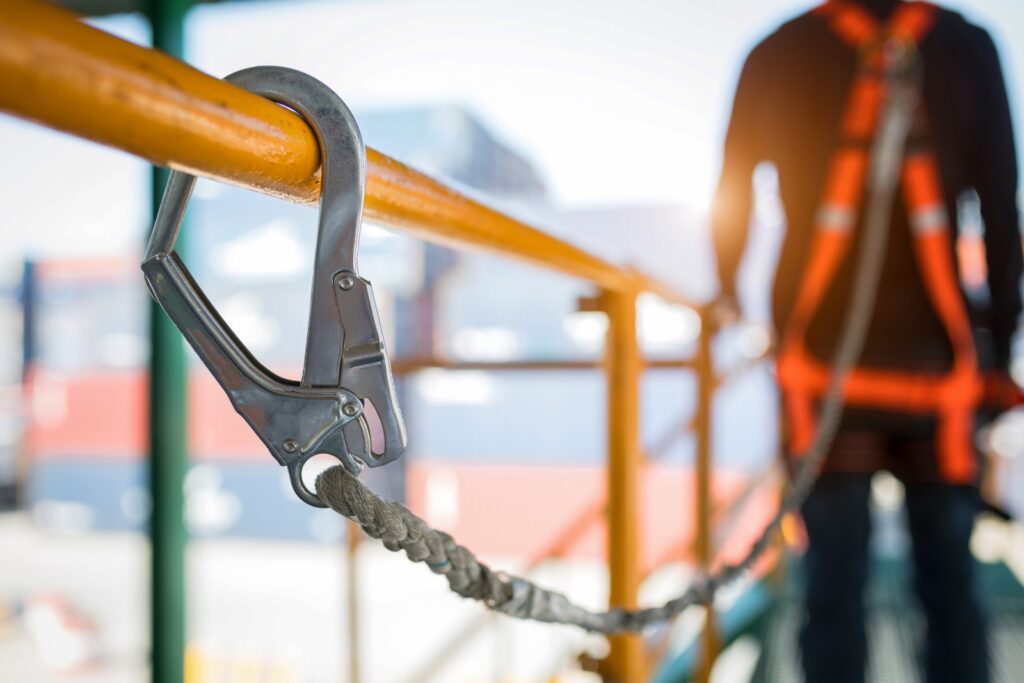
PPE stands for Personal Protective Equipment. In fall protection, this usually means equipment worn by the worker, such as a safety harness, lanyard, anchorage connection, and related components.
The purpose of PPE is to protect one person at a time. Depending on the system, it can either stop the worker from reaching a dangerous edge or reduce the impact if a fall happens.
PPE is important, but it depends heavily on correct use. The equipment must be worn properly, connected properly, and checked regularly. Workers also need training, because even good equipment cannot protect someone who uses it the wrong way.
What Are Edge Protection Systems?
Edge protection systems are collective safety barriers installed around open edges and other fall hazards. Their job is simple: stop people from reaching the danger zone in the first place.
These systems are commonly used on slab edges, stair openings, lift shafts, floor penetrations, and other exposed areas on construction sites. Unlike PPE, edge protection does not protect only one worker. It protects everyone working in that area.
That is why many contractors prefer edge protection for fixed work zones. Once installed correctly, it gives continuous protection without requiring every worker to take individual action each time they approach the hazard.
The Main Difference Between PPE and Edge Protection Systems
The biggest difference is the type of protection they provide.
PPE is personal protection. It depends on the individual worker and follows that worker from task to task.
Edge protection is collective protection. It creates a safer environment for everyone in the work area.
This difference affects how each solution is used on site.
PPE controls the person
PPE is best understood as a worker-based safety measure. It is useful when workers need mobility, when the work area changes often, or when barriers cannot be installed easily.
Edge protection controls the hazard area
Edge protection is a site-based safety measure. It controls the edge itself by blocking access and making the area safer for multiple workers at once.
PPE vs Edge Protection Systems: Key Comparison
|
Safety Aspect |
PPE |
Edge Protection Systems |
|
Protection Type |
Individual |
Collective |
|
Main Function |
Restrains or arrests a fall |
Prevents access to the hazard |
|
User Dependence |
High |
Low |
|
Coverage |
One worker at a time |
Multiple workers at once |
|
Best for |
Mobile, short-term, or specialized tasks |
Fixed work areas with repeated exposure |
|
Safety Style |
Active |
Passive |
Why Edge Protection Often Feels Safer on Site
In many everyday site conditions, edge protection systems create a more stable safety environment.
That is because they do not rely as much on individual decisions. A guardrail or barrier remains in place throughout the day. Workers from different trades can move through the area while the protection stays active.
This is especially useful on busy sites where several people may work near the same slab edge, shaft, or opening. In those situations, a collective barrier often gives more consistent protection than relying only on each person’s PPE setup.
When PPE Is the Better Option
PPE still plays a critical role. In some situations, it is the more practical choice.
It is commonly used when the work area is temporary, when access changes quickly, or when there is no suitable way to install a barrier. It is also useful for inspection work, maintenance work, and tasks where the worker must move beyond the protected zone.
In short, PPE is often the answer when flexibility matters more than fixed-area control.
When Edge Protection Systems Are the Better Option
Edge protection is usually the better choice when the hazard stays in one place and several workers may be exposed to it.
This includes situations such as open floor edges, lift shafts, temporary voids, and slab perimeters during structural work. In these cases, the goal is not just to protect one person. It is to make the entire area safer.
That is where edge protection has a clear advantage. It reduces exposure at the source.
Common Applications of Edge Protection Systems
Edge protection systems can be used in many parts of a project.
Slab Edge Protection
Used around open concrete floor edges during frame construction.
Lift Shaft Protection
Installed around vertical shaft openings before permanent structures are completed.
Floor Opening Protection
Placed around temporary holes, penetrations, and voids in working floors.
Stair Edge Protection
Used around stair openings and unfinished stair zones where workers move frequently.
Perimeter Protection
Applied to outer building edges where fall risks remain present through several project stages.
Why Many Sites Use Both
In real projects, PPE and edge protection are often used together.
This is usually the safest approach. Edge protection controls the general hazard in the area. PPE adds another layer of protection for workers doing higher-risk tasks, working outside protected zones, or entering areas where fixed barriers are not enough.
This combined method gives contractors more flexibility while keeping the overall safety level higher.
Which Option Is Better?
There is no single answer for every site.
If the work area is fixed, shared by multiple workers, and exposed for a longer period, edge protection systems are often the better choice.
If the task is short-term, highly mobile, or difficult to protect with barriers, PPE may be more practical.
The best decision usually depends on four things:
- the type of hazard
- how many workers are exposed
- how long the area will remain open
- whether passive protection can be installed
Conclusion
PPE and edge protection systems are not competitors in the strict sense. They solve the same safety problem from different angles.
PPE protects the worker. Edge protection protects the work area.
For many construction projects, edge protection is the stronger first line of defense because it prevents access to danger and protects more than one person at a time. PPE remains essential where mobility, access, or task type makes collective protection less practical.
The safest projects usually do not depend on just one method. They choose the right combination for the real conditions on site.
FAQ
What is the difference between PPE and edge protection systems?
PPE protects an individual worker, while edge protection systems protect the work area by blocking access to fall hazards.
Is edge protection better than PPE?
For fixed work zones with repeated exposure, edge protection is often more effective because it provides continuous collective protection. PPE is still important for mobile or specialized tasks.
Can PPE replace edge protection systems?
Not always. PPE can protect the worker, but it does not remove the hazard for everyone in the area. In many cases, edge protection remains the better primary measure.
When should PPE be used?
PPE is most useful when barriers cannot be installed easily, when workers need more freedom of movement, or when the task is short-term.
Can PPE and edge protection be used together?
Yes. Many sites use both together to create layered fall protection.
Where are edge protection systems commonly used?
They are commonly used on slab edges, lift shafts, stair openings, floor penetrations, and building perimeters.